
At Layered, we prioritize genuine craftsmanship,
where circularity is an integral part of our design
and production
process. We exclusively use 100% natural or
recycled materials and strive to create durable
products with
a long lifespan and circular
properties.
To ensure the quality of
our products, we conduct extensive
testing that includes durability over time, color
fastness
under various lighting conditions, fire
safety, and chemical
testing to guarantee that our products
are free
from harmful substances such as BPA, formaldehyde,
and quinoline. We also
test fiber
content and conduct specific tests,
such as phenolic yellowing for our white
rugs.
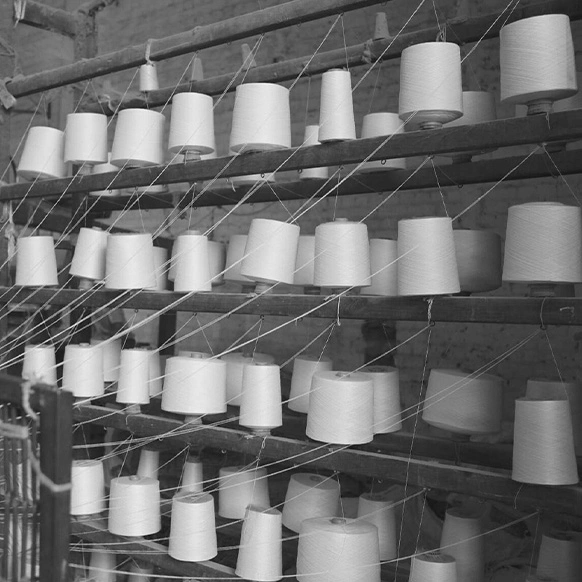

A product made of
recycled fibers, in our case mostly discarded PET
bottles. By choosing a product
made from recycled material you are contributing
to decreased landfill, and a longer life cycle
for
the resources the product is made of.

The fibers in this product
are natural fibers such as high quality wool and
certified lenzing viscose and tencel,
as well as
natural deadstock fibers from our production. We are
always working with improving
our fibers and
choosing material wisely.

Artisan products. Since
these products are made individually, each product
is
unique and slightly different from each
other.


Since we wove our
first handmade rug in Bhadohi in 2015,
sustainability has permeated our entire operation,
from
material selection to production and supply
chain. We value long-term business relationships and
work closely with
our suppliers and production
partners to always ensure the most sustainable
practices possible. For example,
we strive for 100% renewable energy in our
production.
We collaborate with
family-owned suppliers who have a long and proud
tradition of craftsmanship in rug
productions. Our wool rugs are handmade in
Bhadohi, India, which has been known for its
handmade rugs
since the 1500s. Our shaggy rugs
are made in Samarina, Greece, where Flokat
rugs
have been woven for thousands of
years.

We aim for a circular
business model, choosing the right raw materials
from the
beginning and designing products that
are made to last, but also made
with the
possibility of disassembly in mind.

We aim to use recycled and
environmental friendly
materials for all our
Layered packaging

To minimize our transport
emissions, transportation is selected
based on
the lowest carbon footprint when
possible.
To make the greatest
possible impact on the environment and society
within our operations, we focus on five main areas:
sustainable fibers, standardization, circular
solutions, reduced plastic and chemical usage, and
social responsibility (CSR).
We actively work to
ensure sustainability both in production and for the
people involved in it.

All our carpets are handmade from natural or recycled materials, where we strive to minimize the use of plastic and focus on clean fibers. Our viscose and Tencel carpets are made with certified Lenzing yarn*, and we use waste materials and unbleached wool to reduce waste and facilitate the reuse of fibers.
Wool lasts a long time and maintains its quality over time. We avoid material blends whenever possible. By using natural materials like wool and cotton instead of polyester, we contribute to a safer work environment for our employees, who are spared exposure to synthetic materials and chemicals.
We also use FSC-certified wood in our furniture to ensure that the wood comes from responsibly managed forests. Additionally, we use high-quality fabrics that undergo the industry’s highest testing standards, maintaining a high standard for both quality and sustainability.
*Lenzing yarn is made from cellulose, a biodegradable component of natural wood, which can be returned to the ecosystem at the end of the fiber's life cycle.
Since 2020, we have removed all plastic from our sample
packaging and replaced it with packaging made from
FSC-certified
recycled paper. We have also
eliminated printed information sheets in each package
and reduced the size of the packages
to minimize the
transport of air. Sample packaging accounts for as much
as 40% of our outgoing shipments annually.
In addition to reducing plastic usage, we are aware that
chemicals and dyeing impact the environment. Therefore,
we strive to
use eco-friendly dyeing processes and
minimize the use of harmful chemicals in our production.
Our goal is to create products
that are not only
sustainable in their design but also gentle on both
people and the environment.
is an internationally
agreed standard within the industry that sets out
the requirements for an
environmental management
system. It helps organizations improve their
environmental
performance throughmore efficient
use of resources and reduction of waste.

is a Quality management
system that helps companies to meet
their
customer's needs in quality, service, and
product.
Improve working conditions
in the supply chain. BSCI audit helps a
business monitor its supply chain to ensure that
all suppliers
are treating workers ethically and
legally.